Showing posts with label Female Narrator. Show all posts

Thursday, May 2, 2013

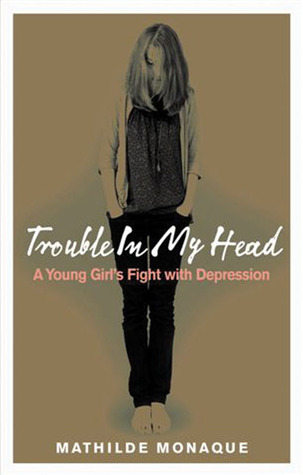
Trouble In My Head


Book: Trouble In My Head
Author: Mathilde Monaque
Pages: 156

At the age of 14, Mathilde develops a deep and crippling depression. She is an extremely bright young girl but can't seem to shake the terrible feelings and thoughts she is plagued with. Her parents admit her to a short-stay hospital where she tries to figure out what brought on the depression and how she will ever get through it.

Trouble In My Head is a well-written and accessible short memoir about a young girl battling depression and anorexia in a hospital setting. I would recommend picking up this book if you or anyone you know suffers from these conditions.

The link between eating disorders and depression:
  • Why some people are at risk for eating disorders isn’t clear but surveys show that depression is often a factor.
  • Depression may lead to eating disorders but there’s also evidence that eating disorders can result in depression. “Being severely underweight and malnourished, which is common in anorexia, can cause physiological changes that are known to negatively affect mood states,” says Lisa Lilenfeld, PhD.
  • “People who develop eating disorders feel as people that they’re not good enough,” Sacker says. “They become obsessed with perfectionism. That perfectionism begins to focus on what they eat. But underlying it is depression and anxiety."
Sources:
WebMD

Sunday, December 5, 2010

The Bell Jar

Book: The Bell Jar
Author: Sylvia Plath
Pages: 288

Set in the 1950's, The Bell Jar is the story of the gifted, extremely intelligent, and young college graduate named Esther Greenwood. Esther spends some time interning as an editor at a magazine company in New York and afterwards experiences a psychological breakdown. She returns to her mother's suburban home but feels as though this world is just as superficial as her previous one. She finds herself unable to write and wonders if she will ever have a fulfilling life. Slowly Esther descends into a deep and suicidal depression that overtakes her entire body. She is placed in a psychiatric hospital where she undergoes electric shock therapy and continues her struggle with mental illness.    

Information about suicide:

  • Suicide is the third-leading cause of death for 15- to 24-year-olds, according to the Centers for Disease Control and Prevention (CDC), surpassed only by accidents and homicide.
  • Studies show that 4 out of 5 teen suicide attempts have been preceded by clear warning signs. These warning signs include: disinterest in favorite activities, problems at work, behavioral problems, substance abuse, declining grades, changes in sleep and eating habits, neglectful of hygiene, and withdrawing from family and friends.
  • According to the National Conference of State Legislatures (NCSL): 19.3 percent of high school students have seriously considered killing themselves, 14.5 percent of high school students made actual plans for committing suicide, and 900,000 youth planned their suicides during an episode of major depression.
Sources:
About Teen Suicide
Teen Suicide

Sunday, November 28, 2010

Girl, Interrupted

Book: Girl, Interrupted 
Author: Susanna Kaysen 
Pages: 192
 

Girl, Interrupted is a bestselling memoir about Susanna Kaysen's experiences at a mental hospital when she was 18 years old. After attempting suicide, she was sent to McLean Hospital where she is diagnosed with borderline personality disorder. Susanna describes the people she meets and how they come to cope with their illnesses and their time at the hospital. Overall, this is a great biographical novel that sheds light on a true and fascinating young girl's account of the battle she had with her mind.

A film starring Winona Ryder, Brittany Murphy, and Angelina Jolie was adapted from the original memoir in 1999. The trailer for this film can be found here.

Information about mental health disorders in adolescents:

  • Research studies have reported that up to about 5 percent of children and up to 8 percent of adolescents in the U.S. suffer from depression.
  • There are 447 Nonfederal Psychiatric Hospitals in the United States.
Sources:
Ohio State University Medical Center
New York-Presbyterian Hospital
American Hospital Association